
Gold Selling Scams: Common Scams and Frauds
Everything you need to know about gold purity before you sell — so you always know what you actually have and what it's worth.
Alok Parmar
June 09, 2026
Article Index
Why do gold-buying scams happen, and what are the two broad types of scams?
Gold selling scams are more common than most sellers realise — not because buyers are obviously dishonest, but because most customers don't fully understand how the valuation works. Without that knowledge, there's no way to tell if the price you're offered is fair. Broadly, these scams fall into two categories: those that manipulate the rate or deductions before weighing begins, and those that manipulate the purity reading itself.
To understand how gold prices are calculated in more detail, click on the link below

How Gold Selling Scams Work: Two Categories
Price-Side Scams
These scams happen before a single gram of your gold is weighed or tested. They target what you believe you should be paid.
1
The Stale Rate Trick
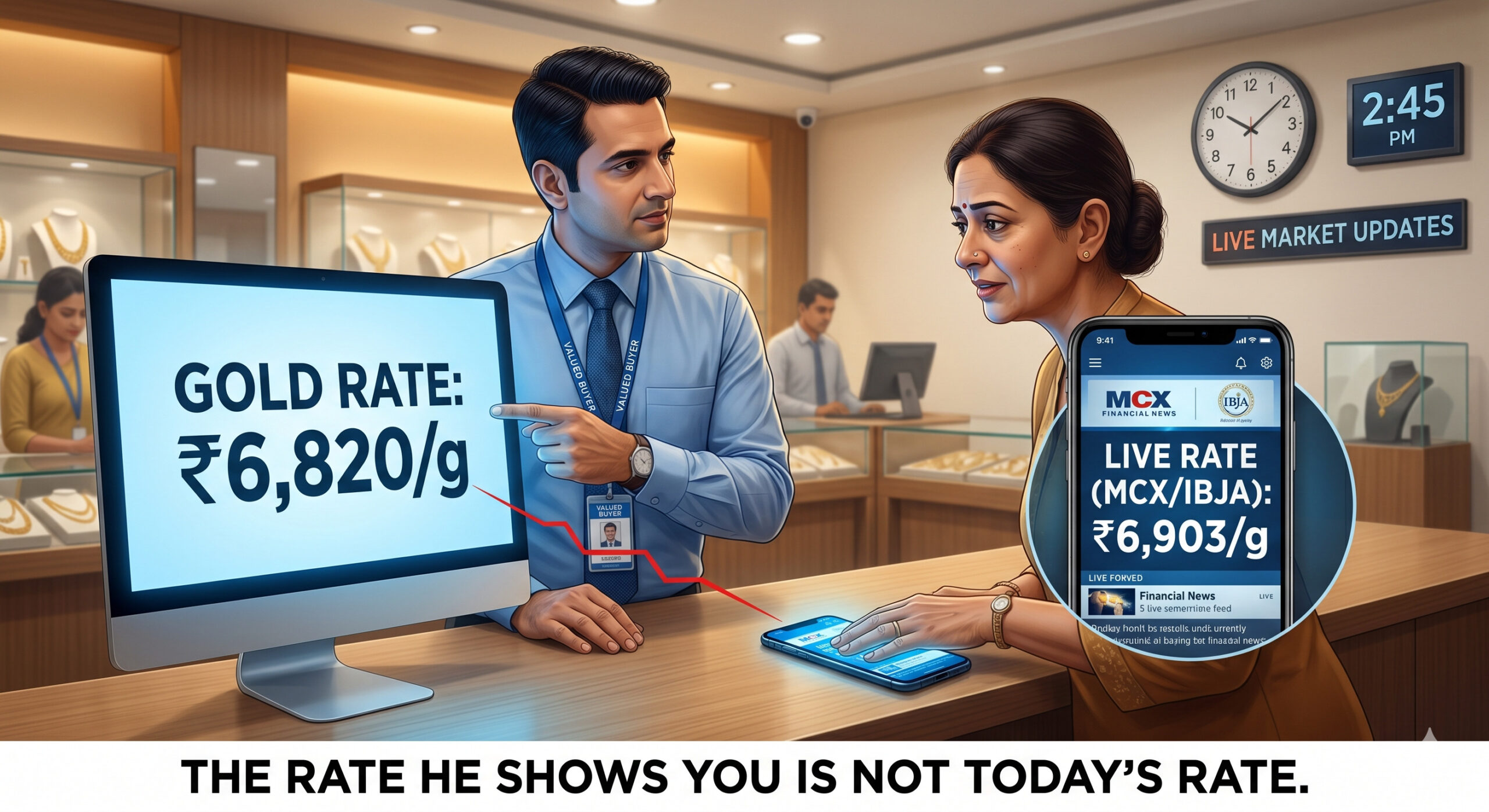
A buyer quotes you a gold rate that sounds plausible but is 1-3% below the current live market rate. Most customers don’t check the IBJA rate independently before walking in. At 10 grams of 22K gold, even a 1% rate gap costs you roughly Rs 550-600. Multiplied across hundreds of daily transactions, this is a reliable profit mechanism for the buyer.
2
The Anchor Strategy

The buyer quotes a high-seeming gold rate upfront to create goodwill and lower your guard. They then recover that generosity through inflated deductions. By the time the math is done, the effective payout is lower than competitors who quoted a more modest rate with lower deductions. The high opening number was bait.
3
Unnecessary or Double Deductions

Standard deductions are: difference between buying and selling price, stone weight, melting loss, and buyer margin. Scam deductions include: charging melting loss AND a wastage fee (two names for the same thing), deducting for dirt or grime and then also charging melting loss, or adding undisclosed fees for documentation, certification, or cash handling. None of these extras are legitimate unless disclosed upfront.
Note: If a buyer understates your gold’s purity to pay less, or applies undisclosed charges, this likely constitutes an unfair trade practice under Section 2(47).
You can file at:
● District Consumer Commission — for disputes up to ₹50 lakh
● National Consumer Helpline — 1915
● E-Daakhil Portal — edaakhil.nic.in (online filing)
4
The Speed Calculation Trap
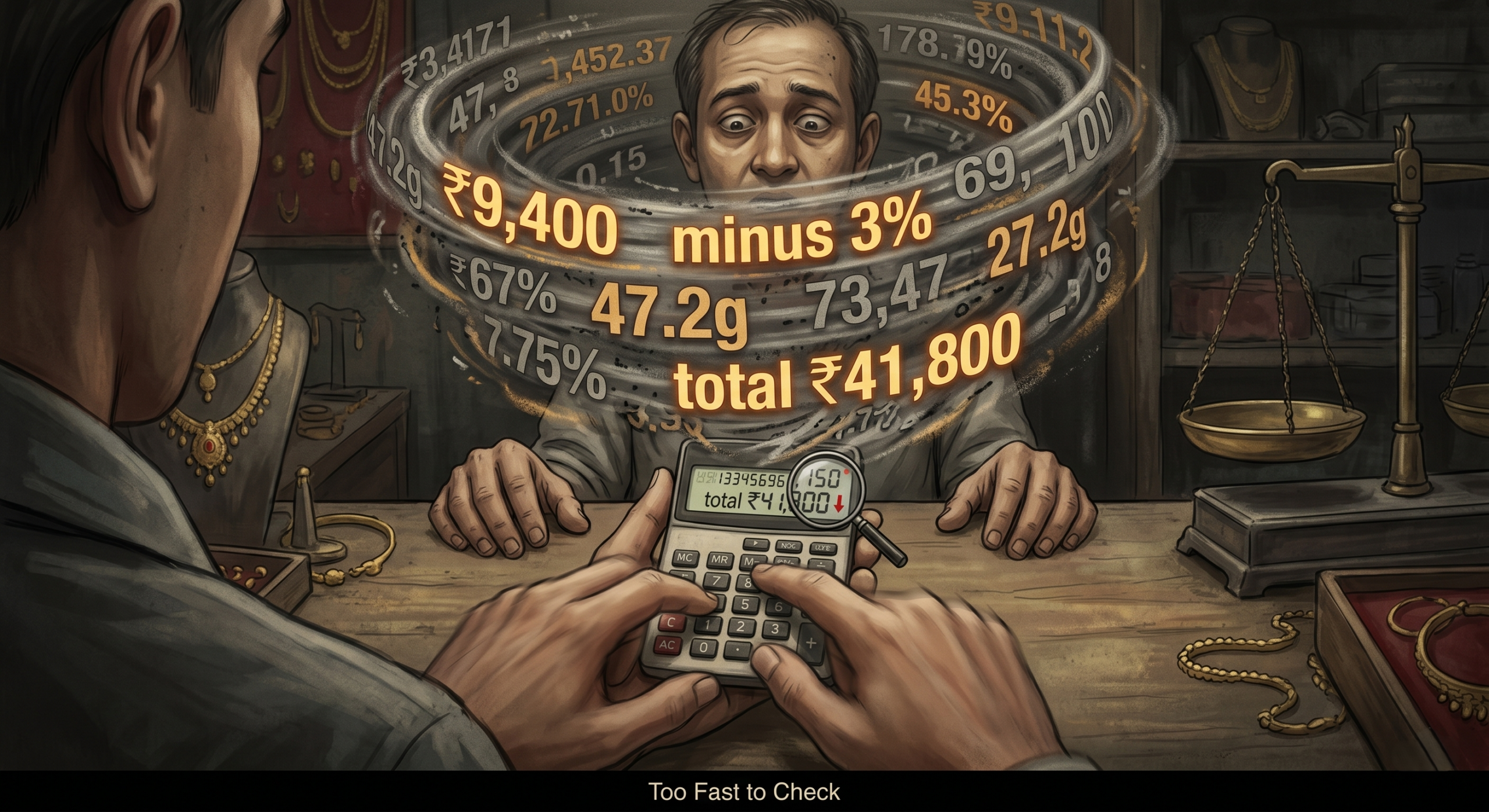
A buyer rapidly fires numbers at you: rate, deduction percentage, weight, payment amount. The calculation is done mentally or on a handheld device and the total is stated with confidence. Research shows that faster calculations cause sellers to rely on trust rather than verification. At no point is a written breakdown offered. The errors, when they exist, almost always favour the buyer.
Testing-Side Scams
These are more sophisticated and harder to detect. They manipulate the purity reading itself. So, even if the rate and deductions are fair, the base number is wrong.
1
The XRF Joint Trick
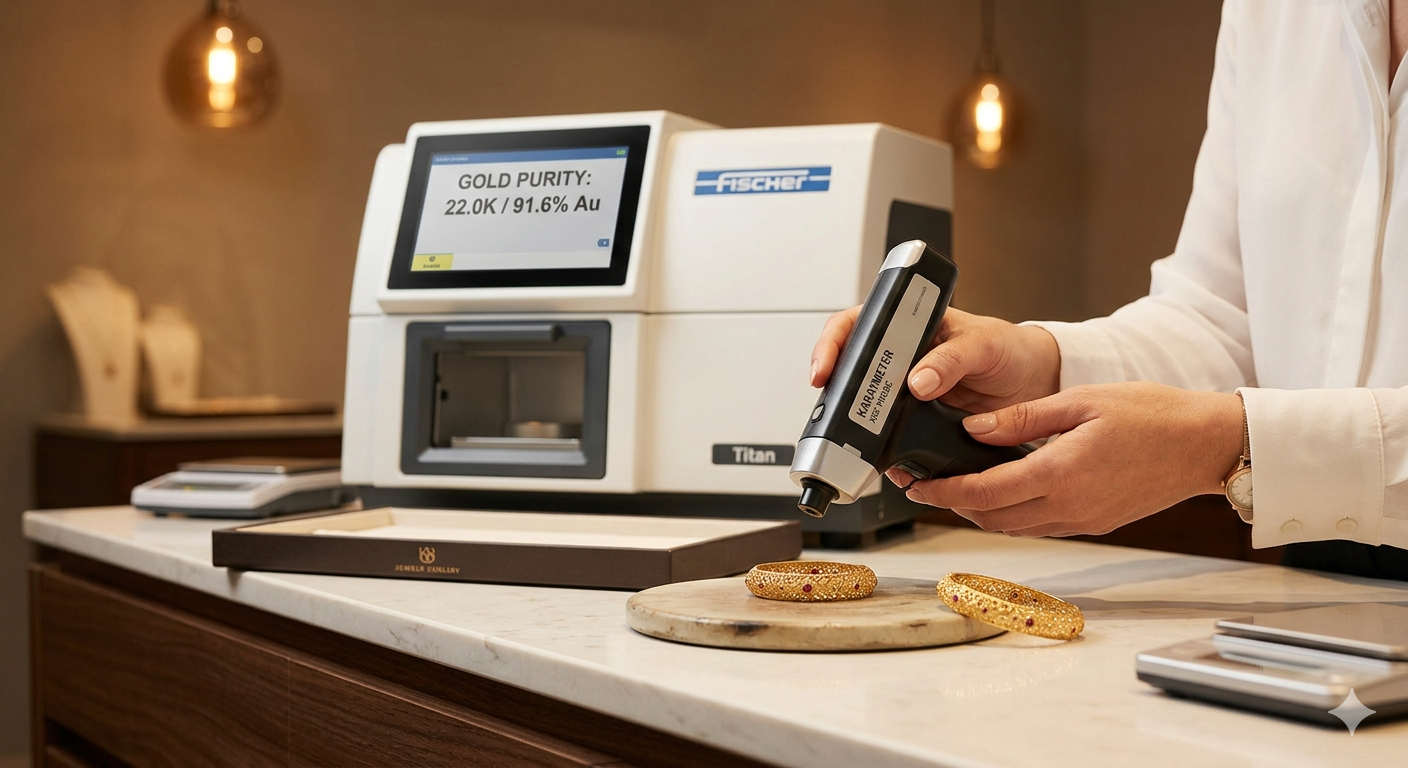
XRF machines test only a small spot on the jewellery at a time. The joints and solder areas of a piece where different components are fused together usually have lower gold purity than the main body of the ornament. Even when the machine is used multiple times on different spots, a dishonest evaluator may intentionally place some readings on these lower-purity joints or soldered sections. This can pull down the average purity result shown on the machine and may then be used to justify a lower price.As a result, the actual overall purity of your jewellery may be higher than the final reading being presented.
2
The Melting Manipulation Scam

During the melting and refining process, if the mold is not mixed continuously, purity distribution becomes uneven. A dishonest buyer can test the low-purity side of the mold, report that result as your gold’s purity, and pocket the difference in recovered gold. This scam is invisible to the seller because it happens post-melting.
3
The Touchstone Trust Game

Acid testing is entirely dependent on the skill and honesty of the person performing it. There is no machine printout, no objective record, and no way for you to verify the result. A tester can deliberately use the wrong acid concentration, misread the reaction, or simply state a lower karat than the test shows.
Note: If a buyer understates your gold’s purity to pay less, or applies undisclosed charges, this likely constitutes an unfair trade practice under Section 2(47).
You can file at:
● District Consumer Commission — for disputes up to ₹50 lakh
● National Consumer Helpline — 1915
● E-Daakhil Portal — edaakhil.nic.in (online filing)
4
The Weight Rounding Loss
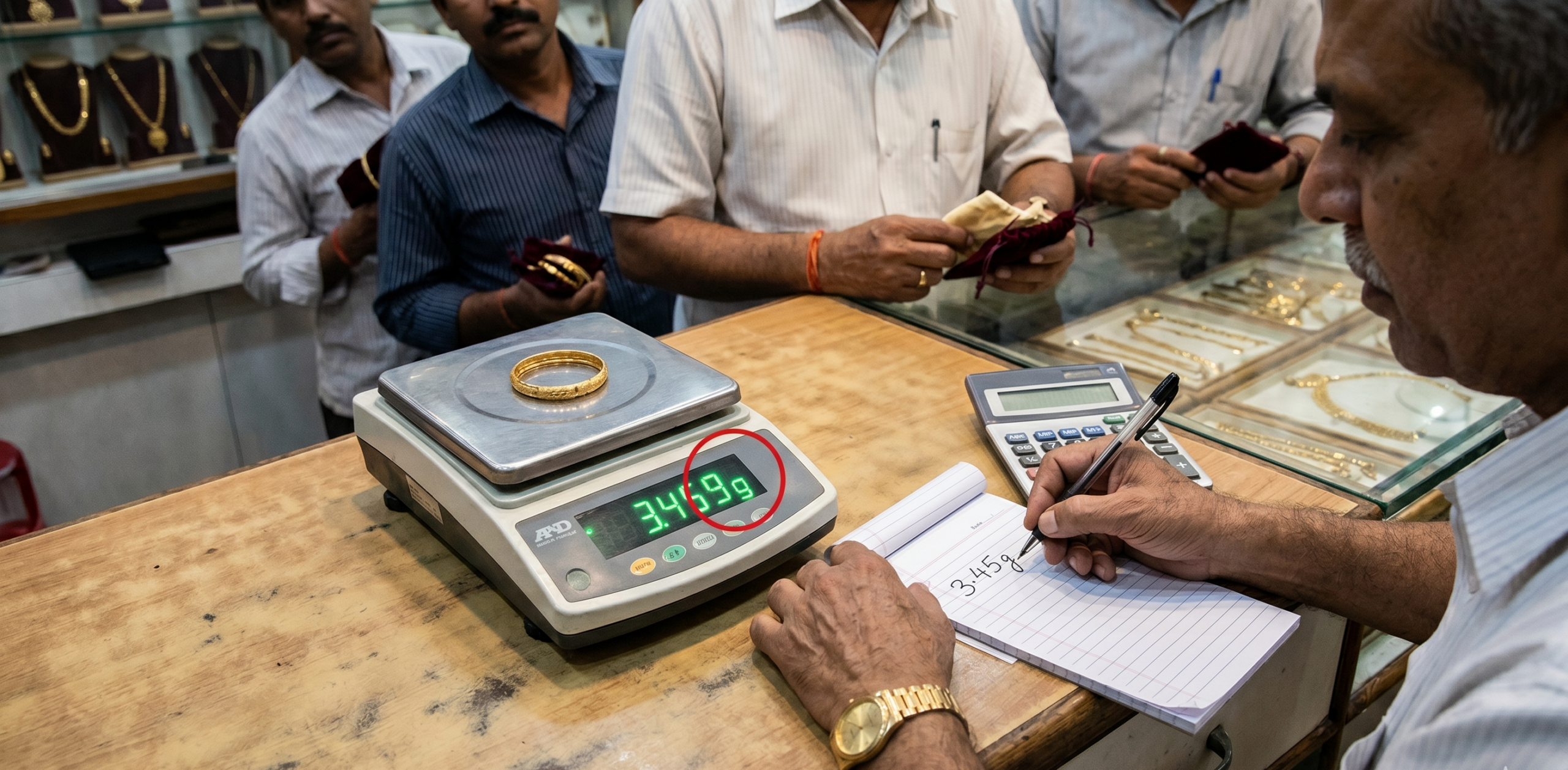
When a jeweller writes down your gold’s weight, standard practice rounds to 2 decimal places. Rounding down 3.459 grams to 3.45 grams loses 0.009 grams. At a gold rate of Rs 6,000 per gram, that is Rs 54 per transaction. Across a high-volume buyer handling 50 transactions a day, that rounding loss generates Rs 2,700 daily at your expense.
What a Fair Buyer Looks Like
Not every difference in price is a scam. Legitimate buyers have genuine cost structures. The distinction between a fair buyer and a dishonest one comes down to transparency:
● They show you the live rate source before starting the calculation.
● They test in front of you, on the main body of the piece, and show you the XRF screen.
● They give you a written, itemised breakdown of every deduction.
● They quote a price before any melting occurs.
● They let you reject the offer with no obligation after testing.
● They welcome your questions and take time to explain the calculation.
Get the real value of your gold
If you're in Mumbai and want to see what a fair gold evaluation actually looks like, AsliValue comes to you. No branch visit. No pressure. You get a full written breakdown before any decision.