
Why Gold Prices in India Didn't Spike During the War
Three forces pulled in opposite directions — and ended up cancelling each other out.
Alok Parmar
June 09, 2026
Article Index
Short answer
When you sell gold jewellery, two things determine your payout: how much gold is actually there, and how pure it is. That holds across earrings, rings, chains, and necklaces.
Condition, completeness, hallmark presence, and craftsmanship don't move the price. The deduction process is the same for every piece: weigh it, identify what isn't gold, subtract it, price what's left.
MATTERS
Gold weight
MATTERS
Purity
DOESN'T MATTER
Condition
DOESN'T MATTER
Craftsmanship
How Each Type of Gold Jewellery Is Priced
1
Earrings: clips and missing pairs
Non-gold parts get deducted. A single earring still prices at the same rate per gram.
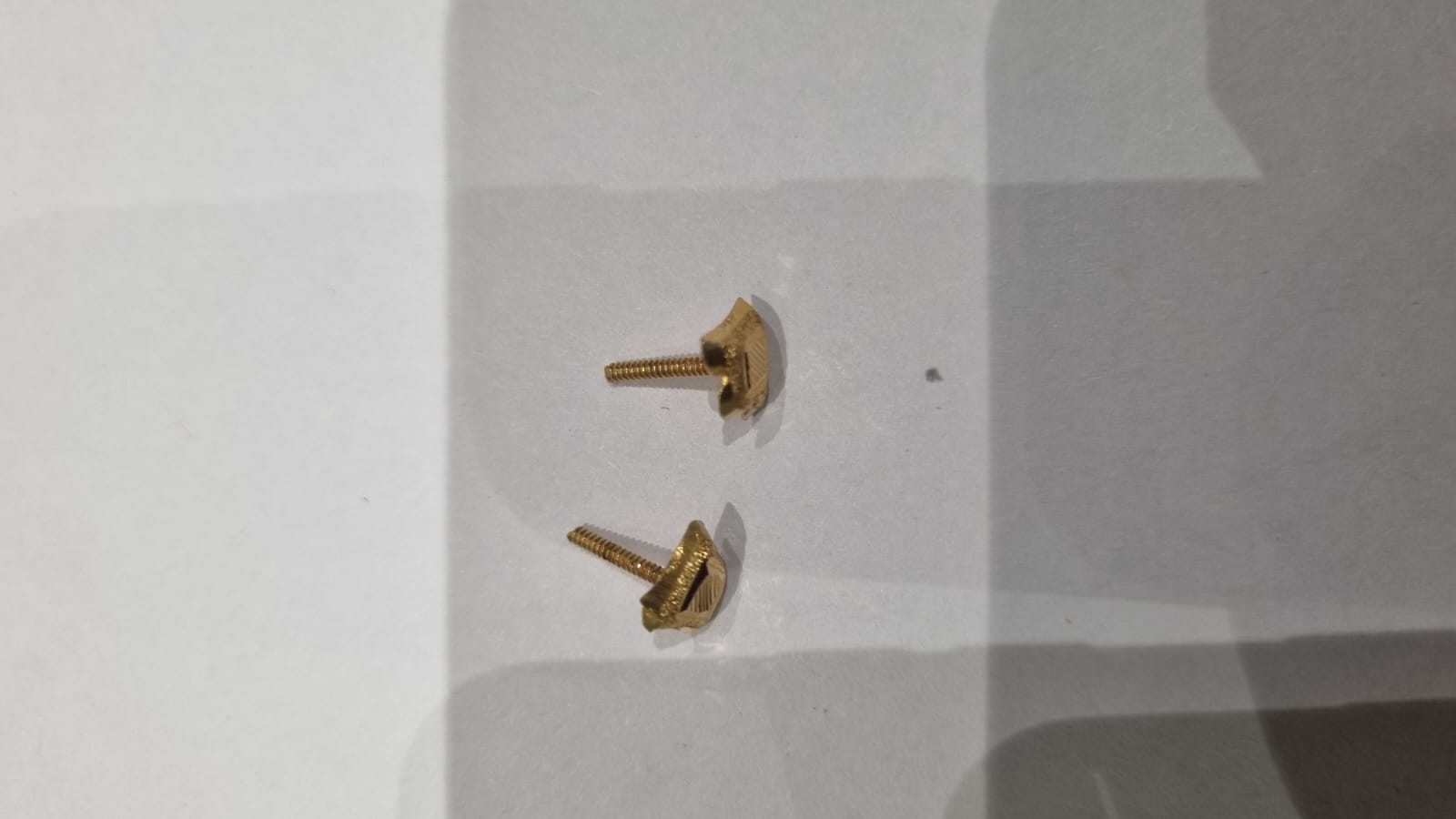
Plastic clips removed to weigh the gold earring
Earring backs, butterfly clips, and pins are usually steel or a mixed alloy, not gold. They're weighed separately and subtracted from the total before pricing. What's left is the net gold weight, and that's what gets priced.
If you only have one earring from a pair, it is not discounted for being incomplete. A 3-gram 22K earring prices at the same rate per gram whether its match exists or not.
What changes is the total weight, not the rate.
Half a pair means roughly half the payout — not a lower price per gram.
2
Rings: how stone deductions work
Stones are weighed and subtracted before pricing. You should see every number, not just the final figure.
Wedding bands and inherited rings often carry weight beyond the metal. That doesn't change how the gold is priced, but it's worth saying upfront.
A diamond solitaire, navratna stones, cubic zirconia, a cluster setting: none of it is gold and none of it is priced as gold. The ring is weighed, the stone weight is estimated or weighed separately, and that amount is subtracted.
Ask for the numbers in order: gross weight → stone weight → net gold weight → purity → rate → final price.
If a buyer skips straight to a number, ask why. Plain bands skip the stone step entirely and price fastest.
3
Chains: damage and missing hallmarks
A broken or tangled chain prices the same as an intact one. No hallmark doesn't mean no accurate purity.
A broken clasp, a tangled knot, a snapped link: none of it changes the price. The chain gets melted regardless of condition. A 10-gram broken chain and a 10-gram intact chain, same purity, are worth the same amount.
Chains also rarely carry visible hallmarks. They're thin, and a lot of older chains predate India's hallmarking system entirely.
No hallmark doesn't mean no accurate purity. Purity is determined independently at the time of sale, not assumed from an old claim or a worn stamp.
4
Necklaces: lac filling and making charges
Heavy necklaces often carry non-gold filling that gets deducted. Making charges don't come back at resale.
Heavy, structured necklaces — temple-style pieces, kundan sets, anything with raised motifs — are often filled with lac or wax to hold their shape. Solid gold at that size and weight would be too costly and too heavy to wear.
The filling has real weight, and none of it is gold. It's identified and deducted before pricing, the same way a stone would be — usually the largest gap people see between what they expect and what the net gold weight actually comes out to.
Making charges don't come back at resale either. They were a one-time manufacturing cost paid to the jeweller for labor, not metal.
At resale, price reflects net gold weight × purity × rate only. Craftsmanship, however intricate, doesn't factor in.
Four things that don't affect your price
1
Condition
Broken, tangled, scratched, or missing a clasp — it gets melted either way.
2
Completeness
A single earring or a half-set still prices at the same rate per gram.
3
Hallmark presence
No stamp doesn't mean no accurate purity — it's tested at the time of sale either way.
4
Craftsmanship
Making charges were a one-time labor cost. They're not part of the gold's resale value.
Get the real value of your gold
AsliValue evaluates every gold jewellery piece at your home, with a full written breakdown, purity tested in front of you, and payment before anything leaves.