Cash or Bank Transfer: Why It Matters When You Sell Your Gold
Why the ₹2 lakh cash limit makes bank transfer the safer way to sell gold
Alok Parmar
June 09, 2026
Article Index
When a jeweller hands you a stack of notes for your gold, it feels like the safer option. No bank. No paperwork. No waiting. But here's something most people don't know: India has a cash limit for selling gold, and once that stack crosses ₹2 lakh, the law holds you responsible, not the jeweller.
The Catch Nobody Mentions
Most people think of cash as the "no questions asked" option. It's actually the opposite.
1
The ₹2 Lakh Cash Limit
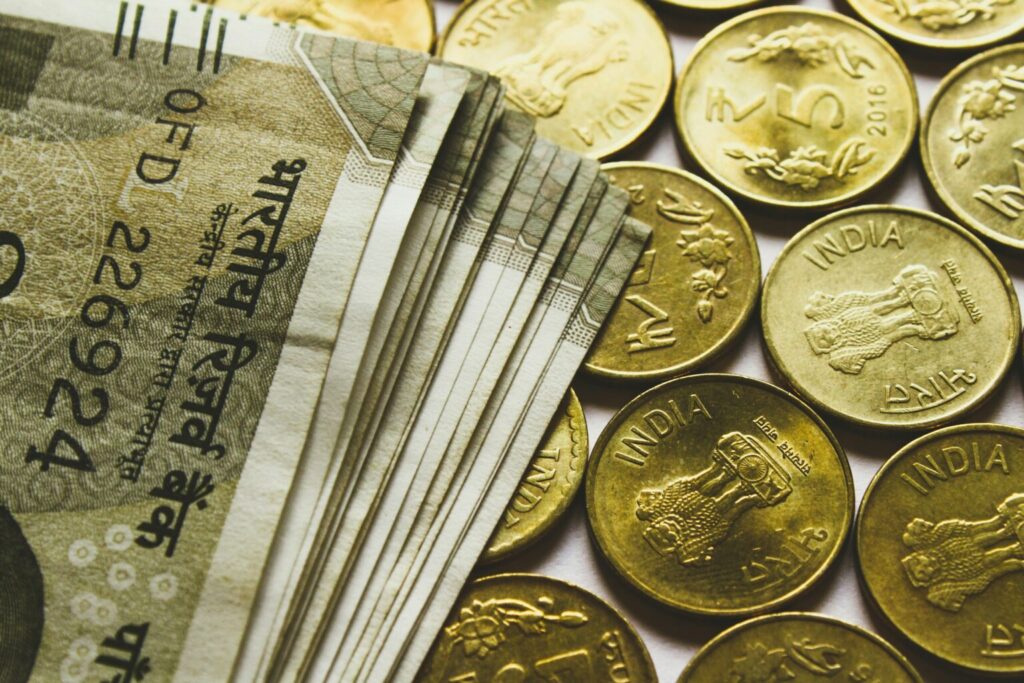
Under Section 269ST of the Income Tax Act, 1961, nobody can receive ₹2 lakh or more in cash from one person, whether that's in a single payment, across one day, or for one event. Break this rule, and the penalty equals the full amount received in cash, under Section 271DA.
Here's the part that surprises people:
the law penalises whoever receives the cash, not whoever pays it. If a jeweller hands you ₹3 lakh in cash for an old necklace, you're the one holding the risk. Not the jeweller.
This isn't some obscure footnote, either. The rule applies the same way to a farmer selling his crop, a family selling a flat, or a household selling gold. Cross ₹2 lakh in cash, and the risk lands on whoever took the money.
Source: Income Tax Act, 1961 — Section 269ST (cash receipt limit) and Section 271DA (penalty for violation).
2
What You Can't Legally Do With It
Say you take the cash anyway. The next problem: there's barely anywhere legal to spend it.
Want to use it to buy gold? Under Rule 114B of the Income Tax Rules, you need to give your PAN for any gold or jewellery purchase of ₹2 lakh or more. Cash payment above that same ₹2 lakh mark isn't allowed at all, no matter whose PAN is on file. The same ₹2 lakh limit applies to most other big purchases too, including property, where deal sizes are almost always higher anyway.
New gold or jewellery — PAN mandatory above ₹2L, cash barred outright above that mark
Property — same ₹2 lakh cash cap applies, deal sizes almost always exceed it
Vehicles — PAN mandatory above ₹2L; cash isn't barred outright but most purchases (even two-wheelers) cross that mark, and all high-value cash transactions are reported to the Income Tax department
Most large household purchases — the same rule that put you at risk blocks the spend too
So the cash in your hand can't legally buy back the gold you just sold. It can't go toward a flat. And it can't move through most large household purchases, not without breaking the same rule that already put you at risk.
Source: Income Tax Rules, 1962 — Rule 114B (PAN requirement for gold and jewellery purchases).
3
Banking It Doesn't Fix the Problem
The obvious next move is to deposit the cash and forget about it. That doesn't make the problem disappear. It just changes shape.
What the Bank Sees
Deposit ₹10 lakh or more in cash into a savings account in a financial year, and the bank reports it to the Income Tax Department through the Statement of Financial Transactions, or SFT. Even a smaller deposit can draw a query if it doesn't match your declared income.
For a household sale, gold that's been sitting in a locker for twenty years, that's a conversation most people would rather avoid, especially with nothing on paper to back it up.
A bank transfer skips all of this. The payment lands in your account already linked to the buyer, the date, and the sale. Nothing to explain later, because there's nothing left unexplained.
Source: Income Tax Act, 1961 — Section 285BA, Statement of Financial Transactions (SFT).
4
India Already Runs on Digital Payments
There's a bigger shift behind all this. The RBI's Payment Systems Report puts digital payments at roughly 99.7% of India's total transaction volume in 2024, and that held through the first half of 2025. Within that, UPI alone made up 85.5% of payment volumes by late 2025.
99.7%
of India's transaction volume was digital, 2024 through H1 2025
85.5%
of payment volume came from UPI alone, late 2025
22,800+ Cr
UPI transactions in 2025, up from under 4,000 Cr in 2021
Physical cash hasn't gone away. Currency in circulation has actually kept climbing, touching new highs in May 2026. But most of that is cash sitting idle, not cash being spent. For everyday spending, the kind a working or middle class household actually does, the country has already moved to bank transfers. A large cash payout doesn't fit into that system. It just sits there, waiting for a use the law will allow.
Source: Reserve Bank of India — Payment Systems Report and Annual Report 2025–26; RBI/NPCI data as reported by Business Standard, CIOL, and IBEF.
Why Bank Transfer Wins
Cash Above ₹2 Lakh vs. Bank Transfer
Bank Transfer
Payment is already linked to the buyer, the date, and the sale
Nothing to declare or justify after the fact
No cap, no PAN paperwork, no waiting for it to clear
Cash
Legal risk sits with you, not the buyer
Can't legally go toward new gold, property, or most big purchases
A later bank deposit still has to explain itself
Before You Take a Cash Offer, Ask
1. Will this cross ₹2 lakh?
2. Can I explain where this money came from later?
3. Does the buyer offer an instant bank transfer instead?
A transparent buyer offers the third option without you having to ask.
This is why AsliValue pays through instant bank transfer, straight to your account, before the gold leaves your hands. The valuation happens at your home, the rate and the deductions are shown to you live, and you can walk away at any point if the number doesn't work for you. Once you accept, payment goes through right away. No waiting for it to clear, no separate trip to a bank.
Get Paid the Way That Protects You
Free home visit. Live valuation shown to you. Instant bank transfer, before the gold leaves your hands.