
Why Gold Prices in India Didn't Spike During the War
Three forces pulled in opposite directions — and ended up cancelling each other out.
Alok Parmar
June 09, 2026
Article Index
One equation controls everything
Every war, every oil shock, every central bank move — it only affects gold prices in India if it moves one of two variables. During the US-Iran conflict in 2026, both variables moved at the same time, in opposite directions. The result was a domestic gold price that barely shifted despite a war playing out in the news.
Domestic Gold Price = International Gold (USD)×USD–INR Exchange Rate
That's it. Both variables moved during the US–Iran conflict — in opposite directions.
WHAT MOVED
The numbers behind the range
$5,000+
International gold before the war — near all-time high
$4,438
Where international gold was trading by early June 2026
$120
Peak Brent crude during the conflict — before easing toward $94
₹86.95
USD–INR rate as oil pressure weakened the rupee
₹1.55–1.60L
Domestic MCX gold — 24K per 10g — held in this band throughout
Three forces
Why gold prices in India held in a range during the conflict
Each force pushed price in a different direction. Together they created a standoff.
1
Rate hike fears pulled gold down
The oil spike reignited inflation fears. Markets that had priced in Fed rate cuts did a U-turn — by late March, 38% probability of a rate hike by December, almost no cuts expected. Higher rates make gold less attractive. Capital left.

2
A weaker rupee cushioned the fall
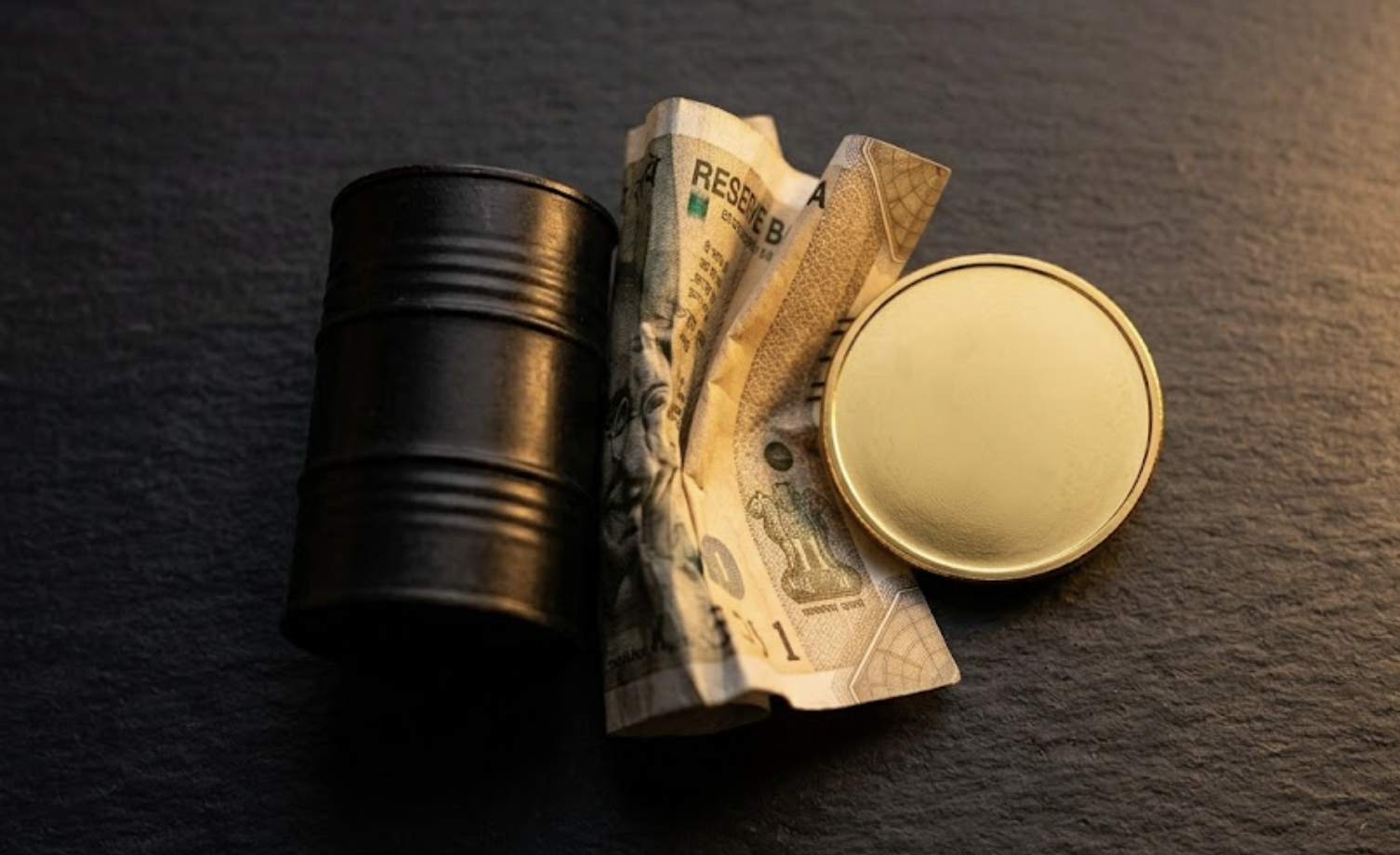
India imports roughly 85% of its crude oil. Rising oil meant a larger import bill, more dollars flowing out, and a weaker rupee. A weaker rupee means you need more rupees to buy the same dollar-priced gold — partially offsetting international declines.
3
Geopolitical risk never fully disappeared
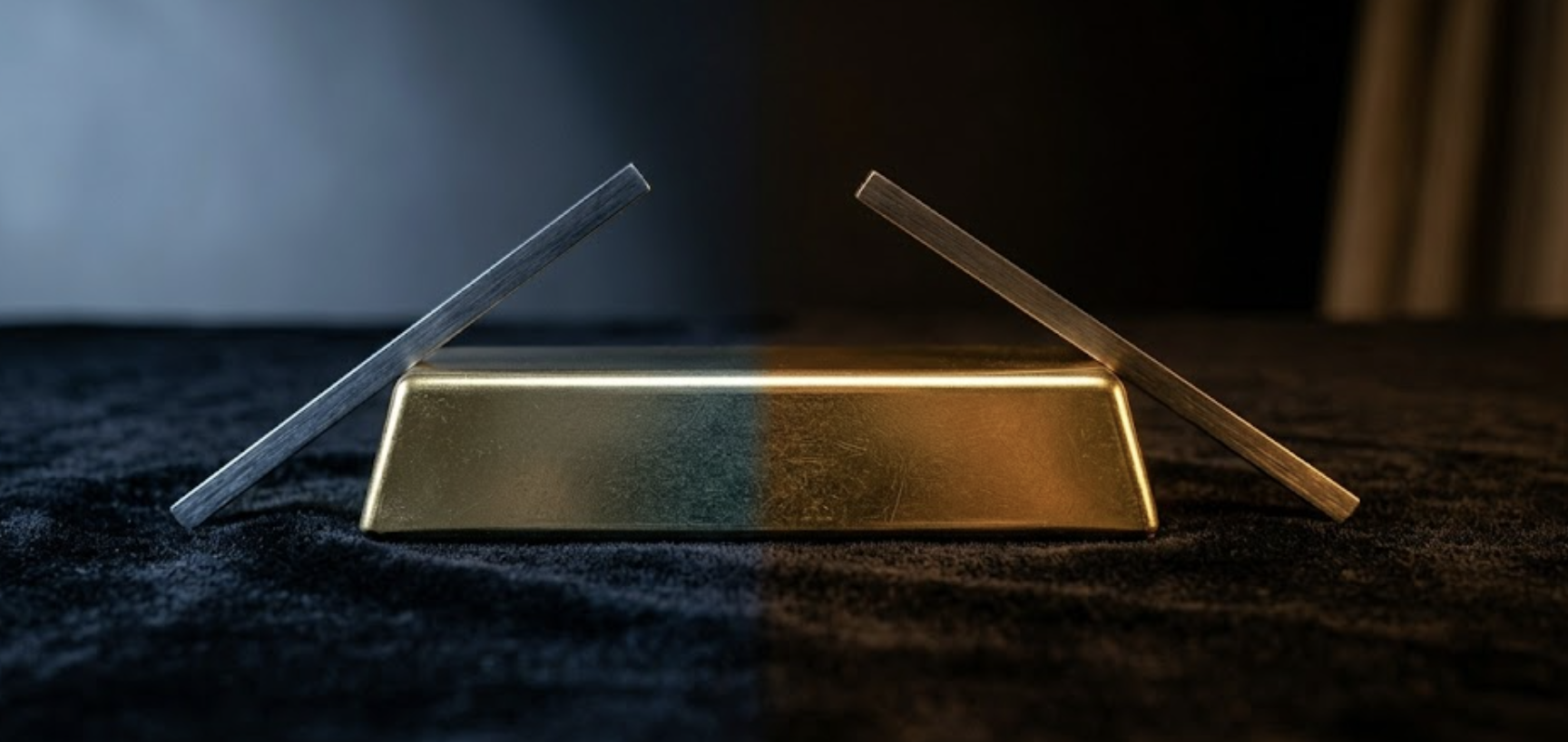
Even at $4,450, international gold remained historically elevated. The safe-haven bid didn't vanish — investors were holding two contradictory thoughts at once: the world is more dangerous, and rates won't fall. The result was a range-bound market, not a crash.
₹1.55–1.60L
Three forces, largely cancelling each other out. Not a floor. Not a ceiling. A temporary equilibrium.
If you're thinking of selling
What breaks this range
Three scenarios — and none of them are easy to call.
Ceasefire holds + oil cools — safe-haven premium reduces, prices likely ease.
Fed cuts rates — gold-positive globally, but if the rupee simultaneously strengthens, domestic impact is mixed.
Conflict escalates — safe-haven demand returns, but so do rate hike fears from higher oil. Same standoff, higher tension.
The current price — historically high by any long-term standard — is worth taking seriously on its own terms, without waiting on outcomes that are genuinely difficult to predict.
Frequently Asked Questions
Gold prices are at historically high levels. Here's what your piece is worth right now.
The ₹1.55–1.60 lakh range described in this article is high by any long-term measure. If you've been holding gold and wondering whether this is a reasonable time to find out what it's worth, our expert comes to your home, tests your gold in front of you using touchstone and acid, and shows you the full calculation at the live domestic gold rate. You decide whether to sell.