
Gold Purity Testing Explained: What Every Seller Needs to Know
Everything you need to know about gold purity before you sell — so you always know what you actually have and what it's worth.
Alok Parmar
June 09, 2026
Article Index
Understanding Karat
What Is Gold Purity — and Why Does It Matter When You Sell?
Gold purity refers to how much actual gold is present in your jewellery, coin, or bar. Most pieces are not pure gold — metals like copper, silver, or zinc are added to make them harder and more durable. When you sell, you're paid only for the gold content, not the total weight. Gold purity testing is what determines exactly how much gold is actually in your piece. This is why two pieces that weigh the same can fetch very different prices.
Understanding Karats: 24K, 22K, and 18K
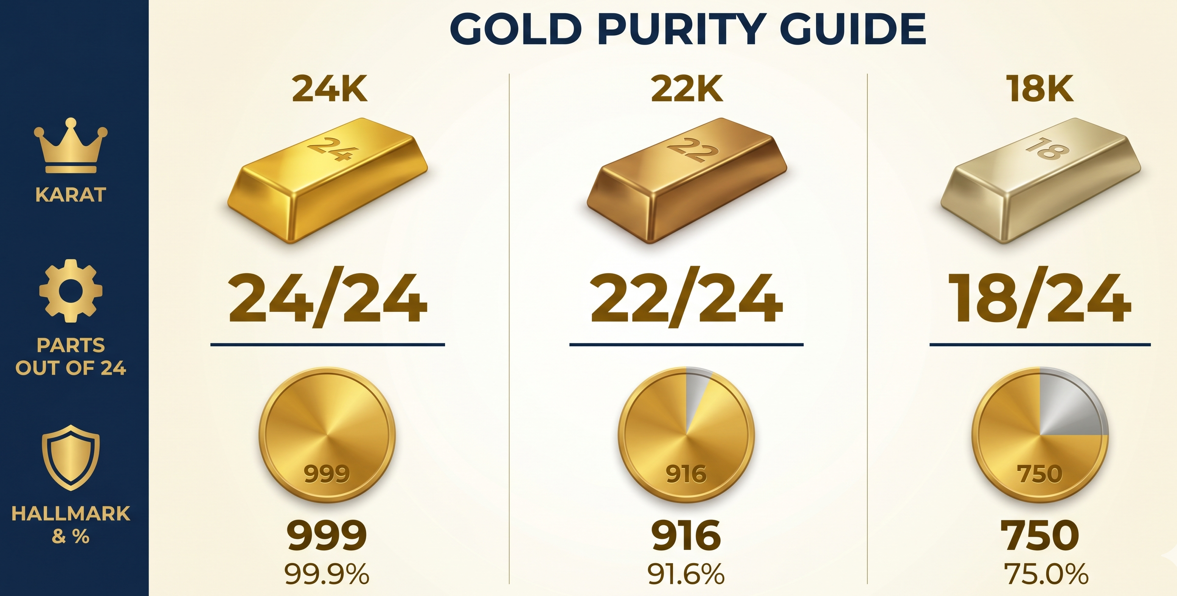
Quick example:
If you have 10 grams of 22K gold at a live rate of ₹6,000/gram (for 24K),
your actual payout base is 10g × 91.6% × ₹6,000 = ₹5,496/gram (before any deductions)
A 22K piece is worth about 8.4% less per gram than a 24K piece. That’s a significant difference — and it’s entirely legitimate.
To understand how gold prices are calculated in more detail, click on the link below.
AsliValue Blog - How is Gold value calculated?
How Is Gold Purity Tested?
That's where gold purity testing comes in — it's the step that converts a hallmark stamp into a number a buyer can actually calculate from.
Method 1: Traditional Methods (Touchstone and Acid Testing)
This is the oldest method – still used by most local jewellers.
The process: a piece of your jewellery is rubbed against a black touchstone, leaving a small streak of gold. Acid solutions are applied to that streak. The reaction or lack of one tells the tester the approximate purity.What it gets right: Simple, inexpensive & Portable — a tester can carry the kit anywhere – Gives a quick rough estimate.
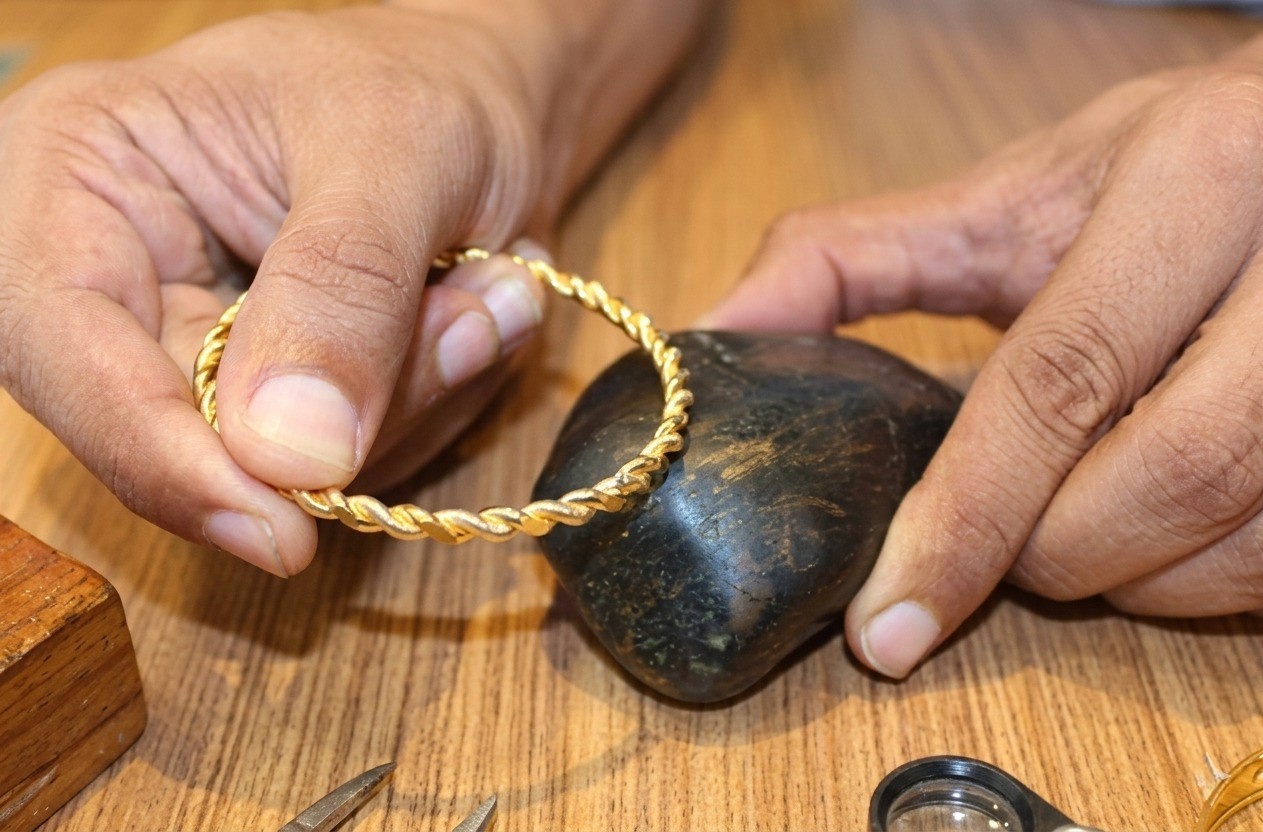
Myth Buster
Rubbing the jewellery on the testing stone damages it – the process only removes around 2–3 microns of gold particles. For reference, 1 micron equals 0.001 millimetres.
To understand the truth behind the myth of gold loss in the touchstone testing method, watch this video.
Method 2: XRF Testing
Modern Gold Testing and Evaluation Method
The process: XRF works by directing a beam of X-rays at your jewellery. The machine gives a precise breakdown of every metal present.
Here’s why it matters to you:
Non-destructive — your jewellery is not damaged or melted.
Instant results — purity reading in seconds.
Transparent — you can watch the reading in real time.
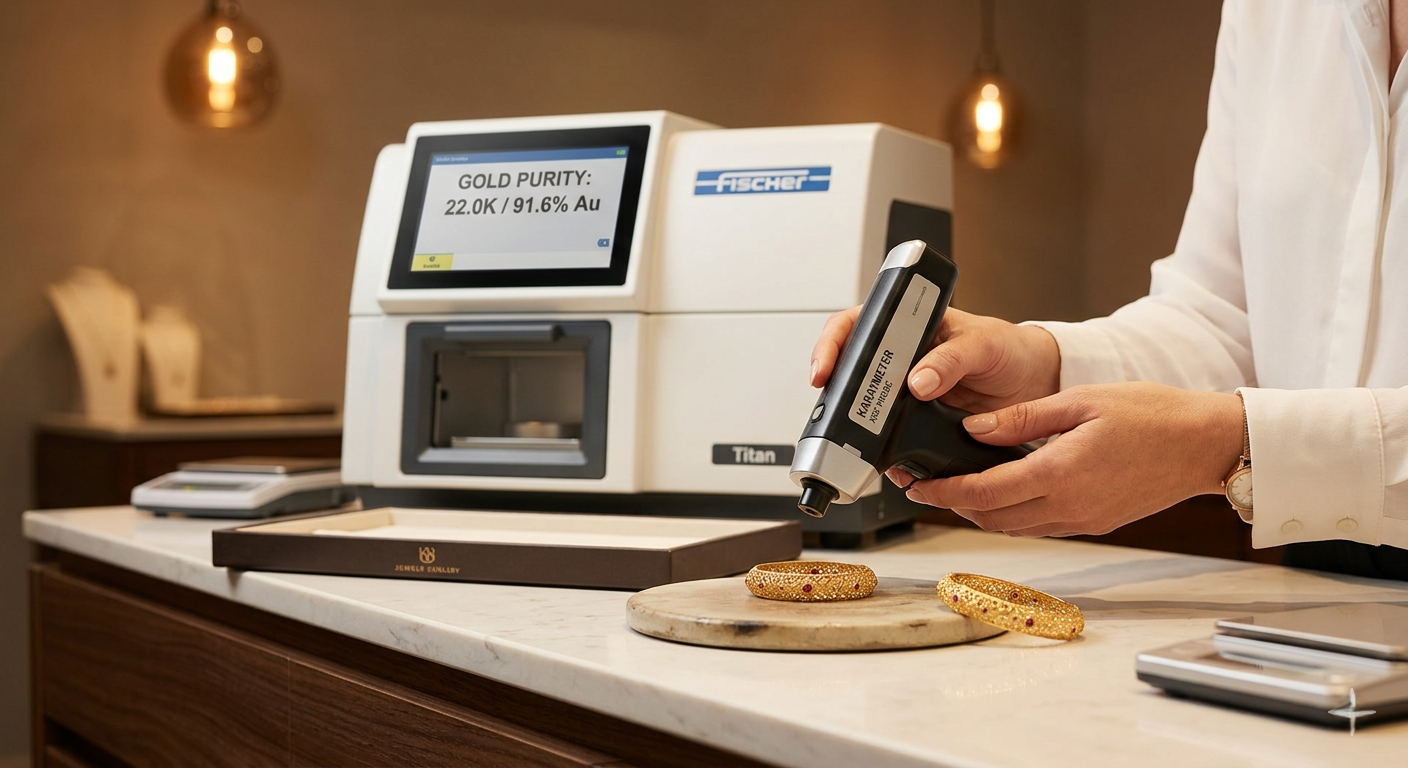
Note: There are certain instances where the XRF reading may differ from the actual recoverable gold value obtained after melting and refining. So, the XRF machines is still not 100% precise in every case.
Even government-authorized bodies such as BIS Assaying and Hallmarking Centres do not certify or hallmark jewellery based solely on XRF testing, as XRF readings alone are not considered sufficient for official hallmarking.
Method 3: Fire Assay
Most accurate purity test that exists — accurate to 99.9%.
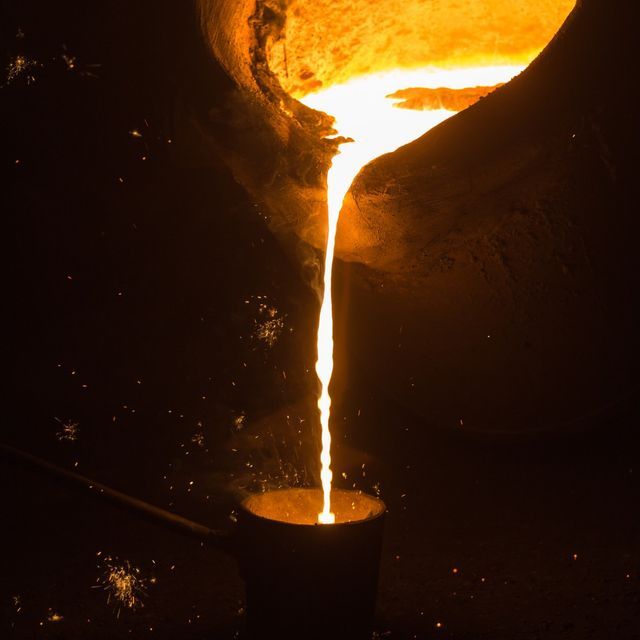
The process: a small sample of gold is melted at extremely high temperatures, which removes all the impurities. The ratio of final weight to starting weight gives the exact purity. While it has the highest possible accuracy, it falls short because it is destructive (a portion of your gold is consumed in the process) & Time-consuming and expensive (not practical for a standard buying transaction).
Why Hallmarking Alone Doesn’t Guarantee Full Resale Value
This is where the process either earns your trust or loses it. There are three methods used across the industry. Each has a different level of accuracy, invasiveness, and cost.
● Soldering material added during repairs — typically lower purity than the main piece, and not reflected in the original hallmark.
● Wax or clay fillings inside hollow pieces — adds weight without adding gold value.
● Enamel or stone settings — contribute to total weight but are deducted during valuation.
● Old jewellery predating consistent hallmarking — India’s mandatory BIS hallmarking only became compulsory in 2021; older pieces carry older, less standardized stamps.
● The design and manufacturing method itself — this is something most sellers don’t realize. How a piece is made directly affects its recoverable gold content.
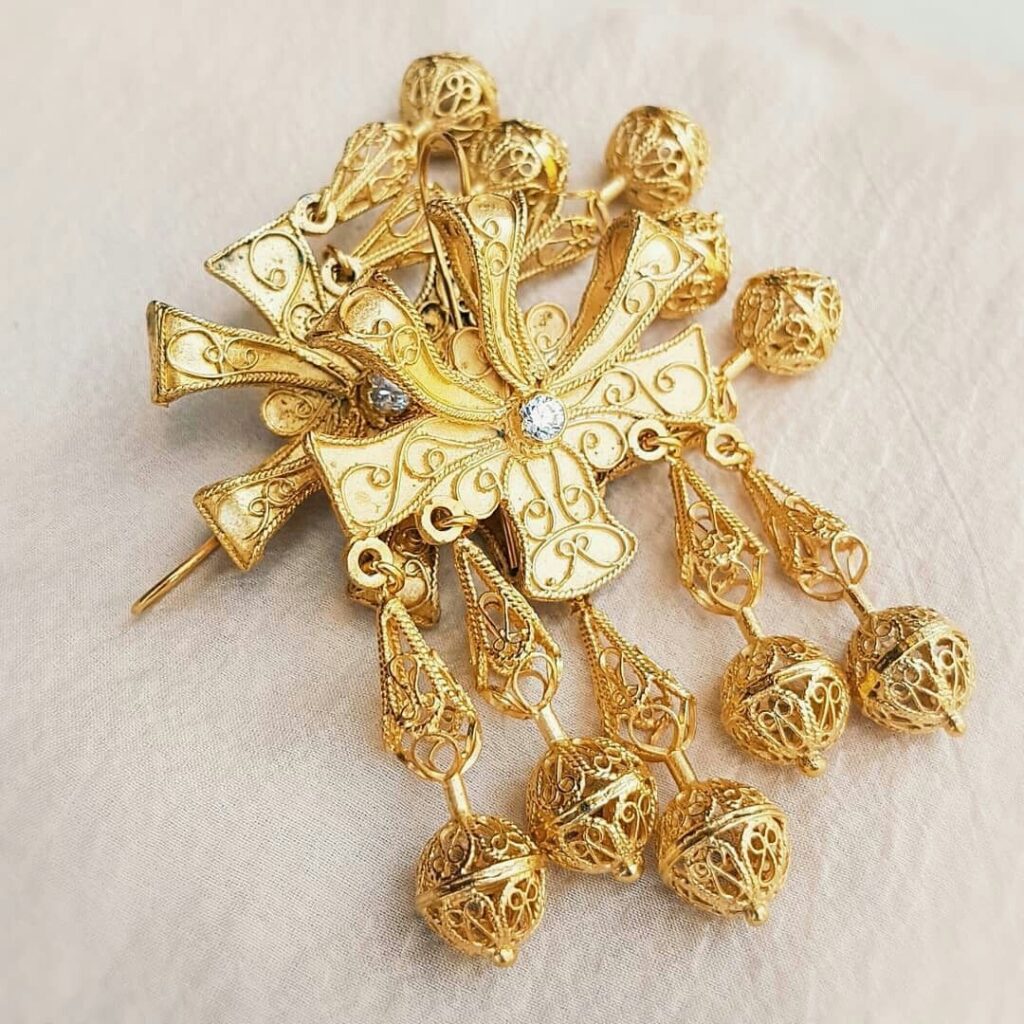
Gold Filigree Jewellery
A casting piece (poured into a mould) tends to have more uniform purity throughout. A handcrafted or filigree piece involves more soldering, joins, and added components each of which may use a slightly different alloy or soldering method.
So two pieces with the same hallmark stamp can have meaningfully different recoverable gold depending entirely on how they were constructed.
This is why a reputable buyer tests at the point of sale; not to question your jewellery’s authenticity, but to price it accurately for what it actually contains today. A buyer who skips testing is absorbing that uncertainty into a safety deduction, which quietly reduces your payout regardless of the true quality of your piece.
Did you know
BIS hallmarking with HUID was introduced on 1st July 2021. Before this, jewellery was marked using several different methods. Click on this link to learn more:
Get the real value of your gold
Free home visit. Certified evaluation. Instant payment. No obligation to sell.