
Can You Sell Gold Without a Bill in India?
If you are wondering whether you can sell without a bill, the short answer is yes. Here is what actually matters.
Alok Parmar
June 09, 2026
Article Index
Is It Legal to Sell Gold Without a Bill?
Yes. No law in India prohibits selling gold without an original purchase invoice. The legal concern is not the missing bill — it is ownership clarity. As long as the gold genuinely belongs to you and you can verify your identity, the transaction is legally manageable for most retail sellers.
What Gold Buyers Actually Check When There Is No Bill
A 20 gram gold chain can be worth ₹1.5 to ₹2 lakh today. Unlike property or vehicles, gold worth lakhs can change hands within minutes with no paper trail. This is why buyers maintain strict verification processes — not necessarily because they doubt you, but because authorities investigate the last known buyer in the chain if stolen gold surfaces later.
The real concern in the industry is usually not the missing bill itself. Buyers are checking whether the gold:
● genuinely belongs to the seller
● Is free from ownership disputes
● Is not stolen or illegally circulated
Why Most Buyers Ask for ID, Not a Bill
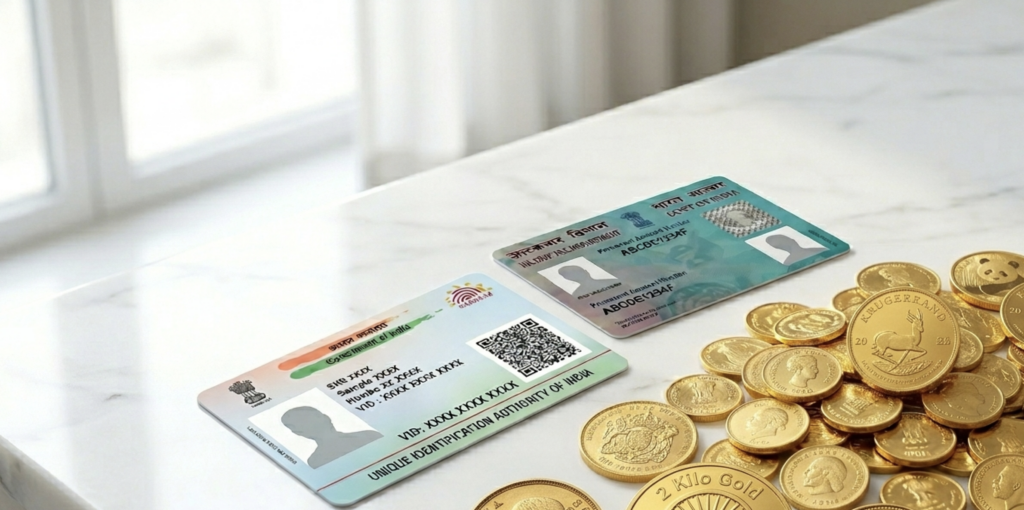
KYC documents matter more than the original jewellery invoice in most transactions
Even buyers who ask for bills do not treat them as absolute proof. Fake invoices and unverifiable old receipts exist in the market. This is why most reputed buyers rely more on:
● Aadhaar or PAN verification
● Signed ownership declarations
● Customer KYC records
● Transaction documentation
PAN card is mandatory for transactions above ₹2 lakh under Income Tax rules. Below that threshold, Aadhaar or any government-issued photo ID is generally sufficient.
What Types of Gold Are Commonly Sold Without a Bill?
Most reputed buyers are familiar with undocumented gold. Sellers commonly bring:
Inherited jewellery passed across generations
● Old household gold bought decades ago
● Gifted ornaments with no receipt
● Outdated or broken jewellery
● Family gold with no paperwork trail
One Situation That Can Get Complicated
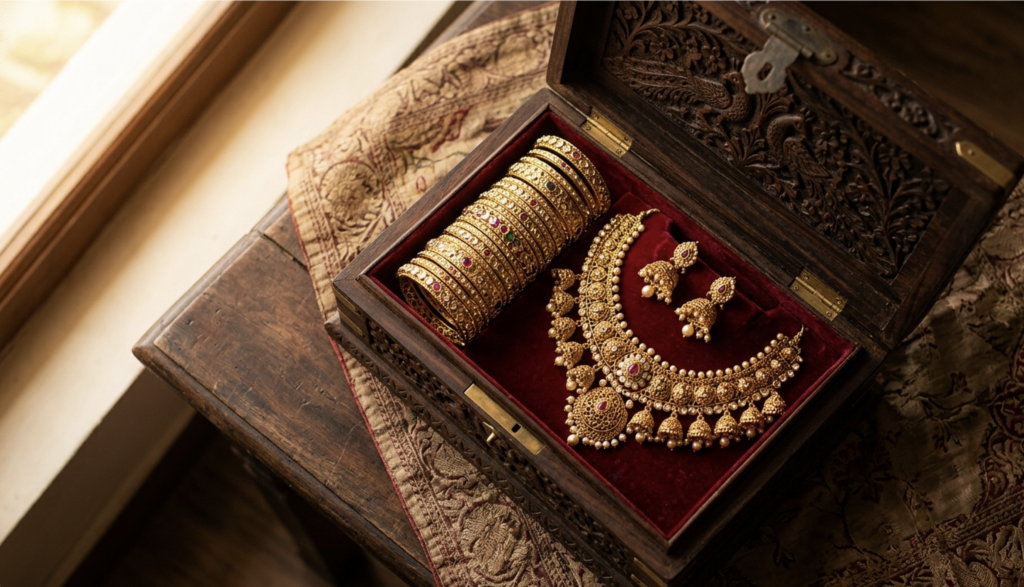
Inherited jewellery is one of the most common cases where gold changes hands without documentation
Inherited gold with unclear ownership between family members is the most sensitive case. After property division or inheritance discussions, multiple people may have a claim on the same jewellery. In such situations, buyers may ask for stronger ownership confirmation or additional documentation before proceeding.
Outside of disputed inheritance, the process is generally straightforward for most retail sellers.
Frequently Asked Questions
Selling Inherited or Old Gold?
AsliValue offers doorstep gold buyback across Mumbai. A bill helps but it is not a requirement. The process covers identity verification, on-the-spot purity testing with results shown to you live, and instant bank transfer via IMPS before the gold leaves your hands. If you have old jewellery, inherited ornaments, or family gold sitting at home, you can get a transparent valuation without stepping out. No pressure at any stage. No hidden deductions.
Book your free home visit